







Search
/en/index.html










Featured Items
-

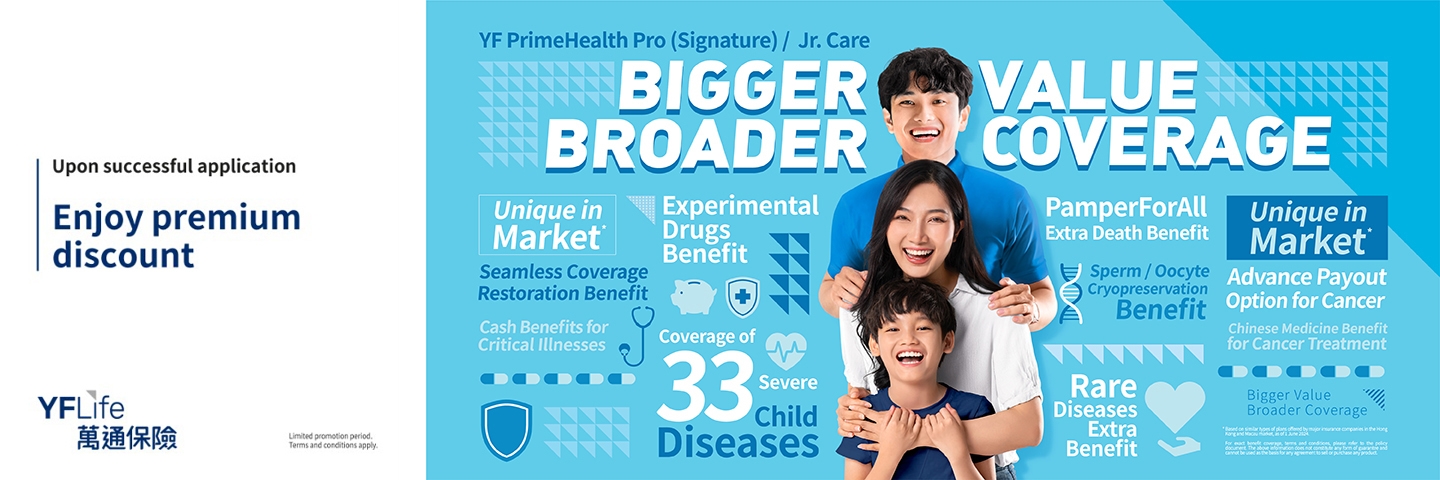
TaxVantage Prestige Medical Plan
A comprehensive medical insurance solution second to none, provides full reimbursement of the actual expenses incurred before, during, and after your in-hospital treatment throughout Asia^, giving you peace-of-mind protection with no itemized benefit sublimit.Learn More

-

VIP Worldwide MediCare
You appreciate the finer things in life and attach great importance to quality. VIP Worldwide MediCare is a highly comprehensive worldwide medical solution that focuses on and commits to excellence in every respect, ensuring that you receive world-class medical treatment in a timely and discreet manner just when you need it most.Learn More
-

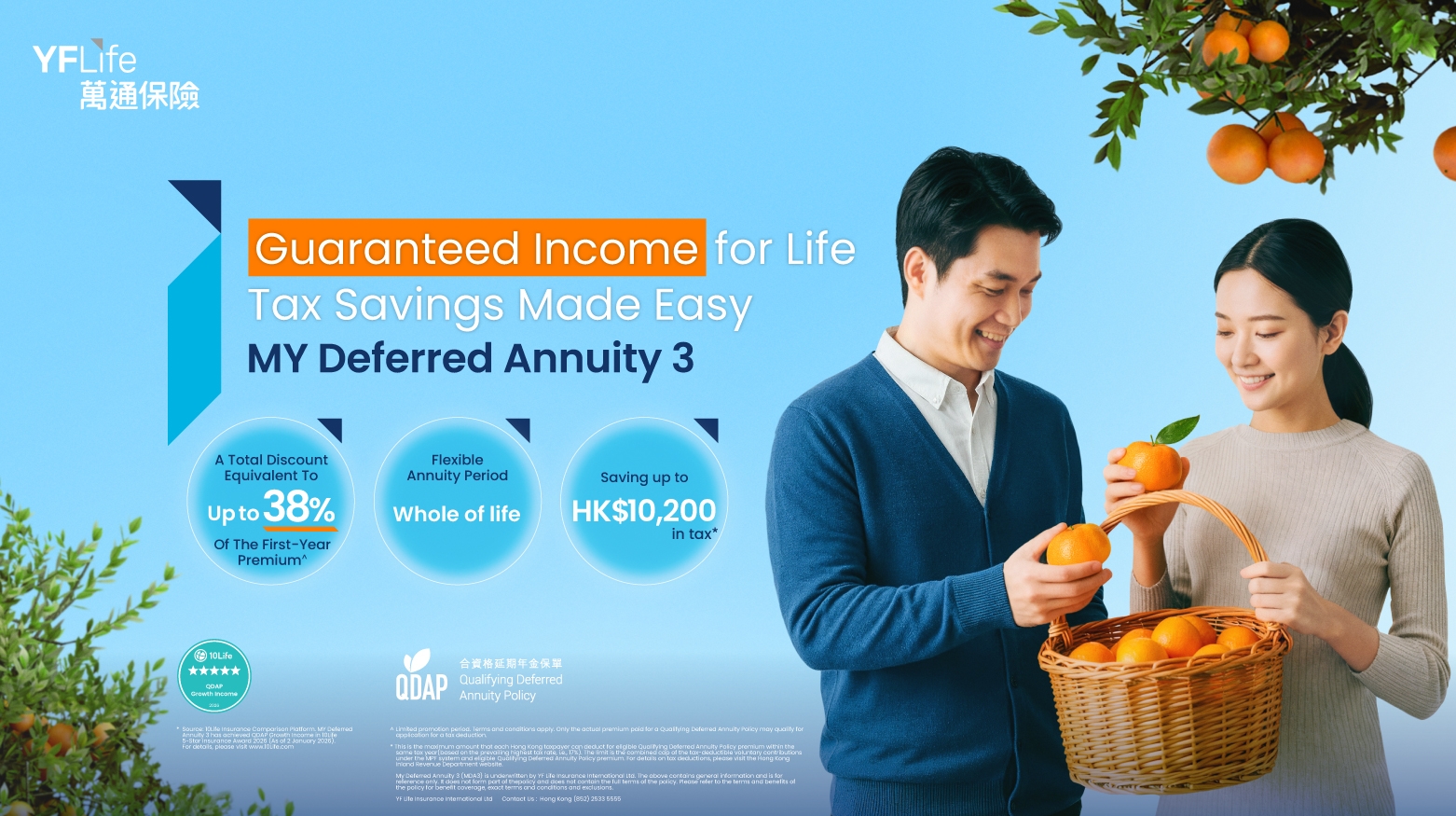
MY Flexi Lifetime Annuity
MY Flexi Lifetime Annuity offers a guaranteed annuity, and on top of that it gives you a range of options. With such flexibility, you can manage your future with confidence in spite of uncertainty.Learn More
-

100% Reward For You Accident Protector
In this ever-changing world, the best security for ourselves and our loved ones against unpredictable accidents is to have a comprehensive accident protection plan.Learn More
-

e-Communication Services
Experience the convenience of going paperless by registering for our E-Communication Services through the YFLink mobile app.Sign Up Now
-

YF Go!
One-stop value-added service platform that delivers the right assistance at the right time to help you take good care of your and your family’s well being and health.Learn More
-

Second Claim Cash Benefit
Cash benefits will be provided to the Client who undergoes the Confinement, Outpatient Surgery, or Outpatient Prescribed Diagnostic Imaging after being reimbursed by other insurance companies.*Learn More
-

Outpatient Surgery Cash Benefit
Cash benefits will be provided to the Client who undergoes the Designated Outpatient Surgery.Learn More


YF Life’s Edge


Unlocking the Invesurance Philosophy
"Invesurance" is our unique investment philosophy, implemented via our distinctive "1+N" investment framework.

Corporate Brand Awards
YF Life delivers excellence through innovative retirement, investment, and protection solutions—earning industry recognition and accolades.

-
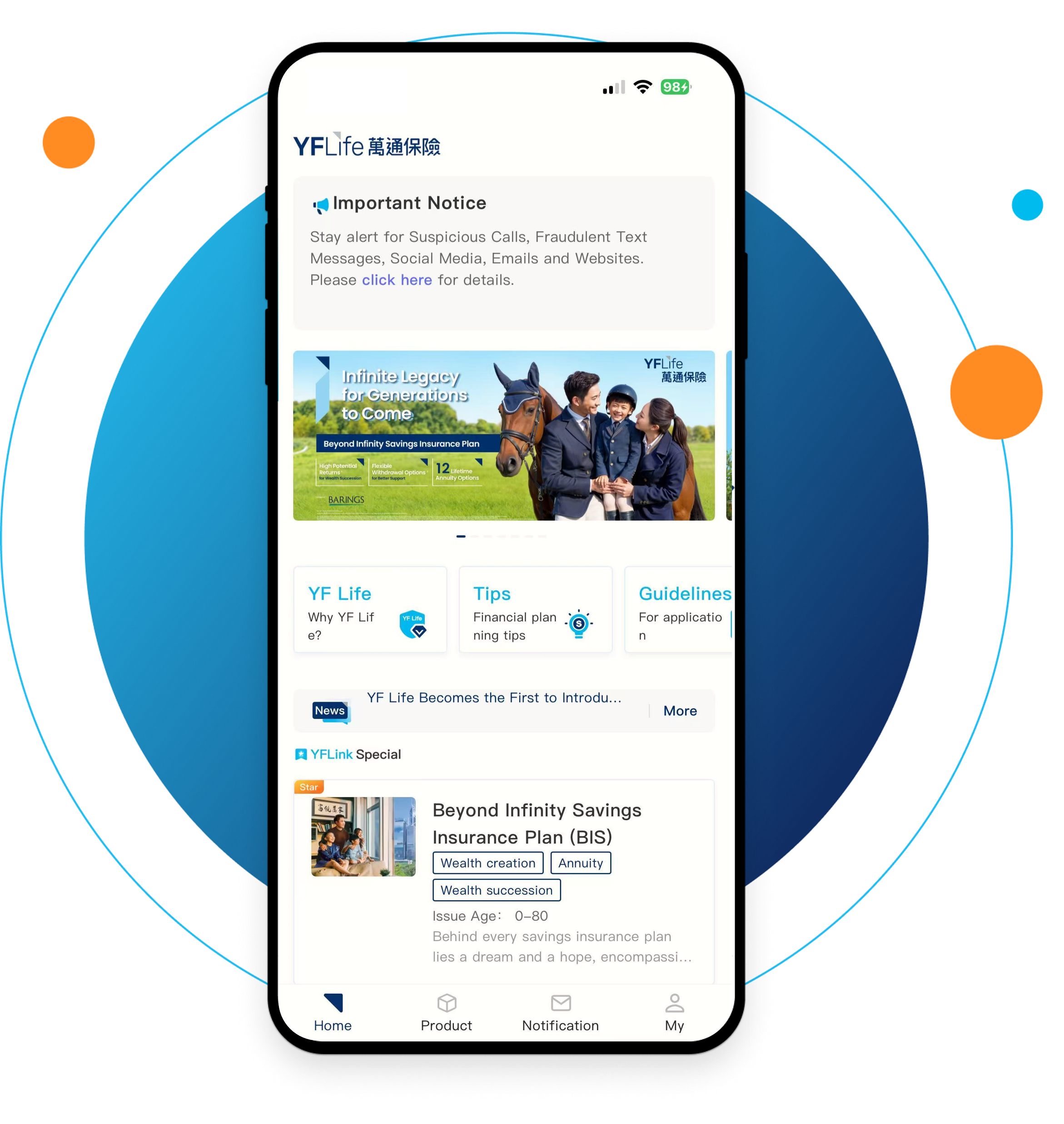
YFLink Info-service App
Your Expert in Policy Management








/en/index.html

